
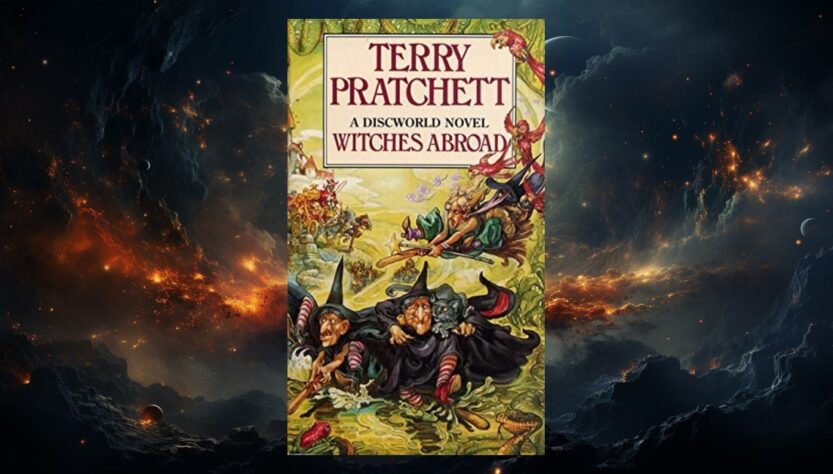
After Wyrd Sisters by Terry Pratchett, this feels like the Witches books opening the door and immediately deciding to kick it off its hinges. Terry Pratchett takes Granny Weatherwax, Nanny Ogg, and Magrat out of Lancre, drops them into a story that thinks it already knows how it ends, and then has enormous fun showing what happens when stubborn, practical witches start arguing with fairy tale logic.
The big idea here is stories as a kind of magical force. Not just tales people tell, but patterns that want to repeat themselves whether the people inside them like it or not. That gives Witches Abroad a sharper edge than a simple parody of Cinderella, wicked godmothers, and storybook kingdoms. Pratchett is poking at fantasy conventions, yes, but he is also poking at the way people surrender to roles, excuses, and supposedly happy endings that suit everyone except the person stuck living them.
What makes the novel work is the trio at its centre. Granny is at her most frightening when she is completely certain she is right, and in this book Pratchett leans hard into the fact that her moral authority is both admirable and slightly terrifying. Nanny Ogg is glorious throughout, all cheerful vulgarity, appetite, and apparent chaos, while quietly being far shrewder than anyone gives her credit for. Magrat, who can sometimes feel like the least defined of the three early on, gets a lot more room here. Her anxieties, ideals, and flashes of backbone stop her being reduced to a punchline, which matters because the book is partly about who gets to define a person in the first place.
Having read the whole Witches run, I do not think this is quite the strongest of them, but it might be the one that best explains what makes this corner of Discworld special. Equal Rites had the raw concept, and Wyrd Sisters had the confidence and momentum. Witches Abroad adds a more unsettling streak. It is sillier on the surface in some ways, with all the travelogue chaos, fairy tale riffs, and comic set pieces, but underneath that it is deeply interested in control, vanity, and the danger of forcing people into a narrative because you think you know what is best for them.
There is loads to enjoy in the texture of it as well. Genua feels properly sticky and strange, not just a backdrop for jokes. The swampy atmosphere, the warped storybook glamour, and the sense that the whole place has been bent around someone else’s idea of romance give the book a very different flavour from the earlier Lancre novels. Pratchett is also especially good here on travel itself, on the indignity, the boredom, the weird encounters, and the way Granny and Nanny can turn almost any stop on the road into either a philosophical duel or a public nuisance.
If I have a criticism, it is that the middle stretch occasionally feels more episodic than cumulative. That is not unusual for this era of Discworld, and individual scenes are so funny that it is hardly a chore, but it does mean the novel can feel a touch looser than the very best later books. There are also places where the satire lands so cleanly that the surrounding plot almost has to hurry to keep up. Compared with the absolute top tier Pratchett, the structure is a little less elegant.
Even so, this is still a very easy book to recommend. If you like fantasy that understands stories well enough to mock them, and likes people enough to rescue them from those stories, Witches Abroad is a cracking time. If you liked Jasper Fforde, Diana Wynne Jones, or the parts of Shrek that wish they were cleverer and much nastier, there is plenty here for you. It is funny, pointed, and full of that very Pratchett trick where a daft line lands first, then the idea behind it sneaks up half a page later.
Four stars feels right to me. It is not my favourite Witches novel, and it does not hit the emotional or structural heights Pratchett would reach later, but it is clever, distinctive, and packed with memorable moments. More importantly, it understands that fairy tales are never really harmless. They are ways of telling people who they are supposed to be, and the witches, being witches, are having none of that.
Rating: 4/5
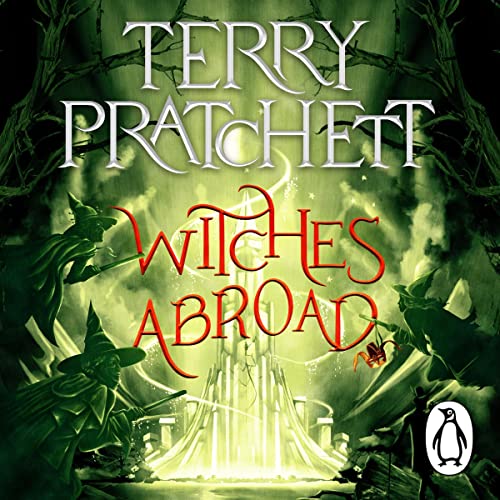
The Audible UK edition is narrated by Indira Varma, Peter Serafinowicz, and Bill Nighy and runs to 9 hours and 53 minutes.
Discover more from Unfolded Universe: Sci-Fi Book Reviews
Subscribe to get the latest posts sent to your email.